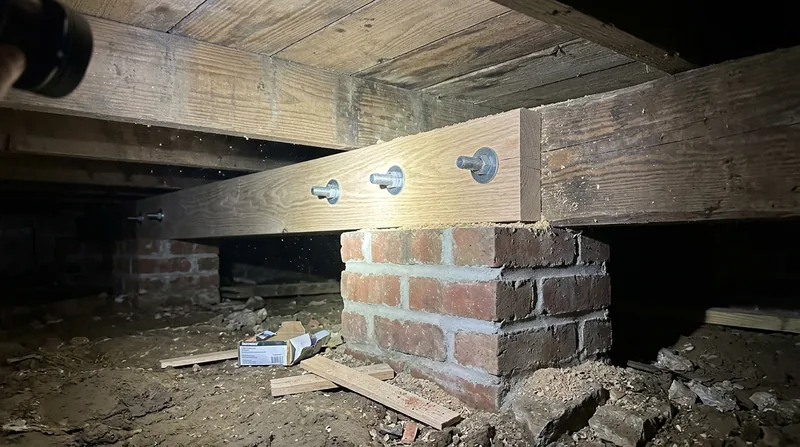




Sagging, bouncy, or soft floors in Louisville's older homes usually trace to damaged floor joists or subfloor. The region's freeze-thaw winters, seasonal soil movement beneath pier foundations, and the humidity that drives termite pressure combine to create real joist stress. Whether you live in a brick Victorian in Old Louisville, a craftsman bungalow in the Highlands, a working-class frame cottage in Butchertown, or a mid-century ranch in the suburbs, floor joist and subfloor repair is often the difference between a stable floor and one that tells you something is wrong underfoot. We sister or replace compromised joists, rebuild subfloor sections, and level floors before finishes go back down. Our approach is repair-first: if the wood justifies it, we fix it rather than replace it.
Why Floor Joist and Subfloor Damage Matters in Louisville's Older Housing Stock
Louisville's residential foundation types and climate create predictable joist failure patterns. Pier-foundation homes in Germantown and Old Louisville sit on masonry piers that settle unevenly over time, stressing the rim joist and sill plate where they meet. The region's four-season freeze-thaw cycle pushes moisture into wood framing, and the high humidity, especially in spring and after heavy rain, accelerates decay in joists that have already begun to fail. Termite pressure is real here, and termite damage compounds the problem. A soft or bouncy floor is not merely annoying; it signals structural movement that will worsen if untouched.
- Sagging floors develop when joists lose bearing capacity from rot, termite damage, or seasonal wood movement beneath pier foundations.
- Bouncy or springy floors indicate joists that are undersized, damaged, or undersupported at one or both ends.
- Soft spots in the subfloor mean decay has reached the surface layer, and the joists beneath are likely compromised.
- Water stains, mold discoloration, or musty odor in the basement or crawlspace signal active or past moisture infiltration into the joist bay.
Addressing joist and subfloor damage early prevents larger repairs down the road. The longer a joist stays compromised, the more load transfers to adjacent framing, and the faster secondary damage spreads.
Key info: Louisville's limestone-karst bedrock and clay soil shift with the seasons, moving the piers and sill plates that support older homes. This seasonal settling stresses sill plates and rim joists in particular. Combined with freeze-thaw moisture intrusion, it creates the conditions for both wood rot and structural sagging. A structural engineer can assess whether load-bearing alterations require permits; consult the Louisville Building and Safety Department for thresholds specific to your work scope.
How We Repair and Replace Floor Joists and Subfloor in Louisville Homes
Our process starts with a clear assessment of the damage. We identify which joists are compromised, whether the subfloor is salvageable, and whether the rim joist or sill plate has failed. We then propose repair or replacement based on the wood's condition and the structural need. Sistering (bolting a new joist alongside a damaged one) works when the joist still carries some load and the damage is localized. Full joist replacement is the answer when decay or termite damage is extensive. Subfloor rebuilding follows, using solid blocking and fastening patterns that match current building code standards for the Louisville area.
- We expose the joist bay by removing flooring and any blocking that obscures the damage.
- We assess each joist with a probe and moisture meter to determine sound wood from compromised wood.
- We sister damaged joists by bolting a new pressure-treated or dimensional lumber joist alongside the existing one, transferring load gradually.
- We replace joists entirely when rot or termite damage extends more than one-third of the joist depth or length.
- We rebuild the subfloor with solid-sawn lumber or engineered subfloor, blocking between joists, and fastening per Louisville building code.
- We level the floor before finishes are reinstalled, using shims and blocking to correct sag and ensure a stable, flat surface.
The entire process keeps the same carpenters on the job from start to finish, so you get continuity and accountability. If your home also has wood rot or dry rot in other structural members, we can address that in the same visit.
Local example: A 1920s bungalow in Crescent Hill showed a 1.5-inch sag in the main floor. The joists were white oak (good wood), but three of the six joists in the damaged bay had lost 40 percent of their depth to rot in the bottom flange, where moisture from a slow crawlspace leak had accumulated. We sistered those three joists with pressure-treated 2x10s, rebuilt the subfloor, and shimmed the floor back to level. The original joists remain in place, load-sharing with the new members. The floor is now solid and level. Cost and timeline were both lower than full joist replacement would have been.
| Approach | Description | Best for |
|---|---|---|
| Sistering | Bolting a new joist alongside the damaged joist, sharing the load. | Localized rot or damage affecting less than one-third of joist depth; sound wood remaining to carry load. |
| Full Joist Replacement | Removing the damaged joist entirely and installing a new one in its place. | Extensive rot, termite damage, or structural failure affecting more than one-third of joist depth or length. |
| Subfloor Patching | Cutting out and replacing localized soft spots or water-damaged subfloor sections. | Surface damage to subfloor when joists below are sound and moisture source is resolved. |
| Rim Joist and Sill Plate Repair | Replacing the perimeter joist and sill where they meet the foundation, securing the entire floor frame. | Rot or settlement in the rim joist or sill plate, common in Louisville pier-foundation homes. |
| Floor Leveling and Shimming | Using shims, blocking, and adjustable posts to correct sag and ensure a level floor surface. | Floors that have sagged over decades; performed after joist repair is complete. |
Floor Joist and Subfloor Repair Cost in Louisville: What to Expect
Floor joist and subfloor repair in Louisville typically starts at $1,800 for a single-joist sister or small subfloor patch in an accessible crawlspace. Cost climbs with the number of joists involved, the extent of subfloor damage, access constraints, and whether the rim joist or sill plate requires work. A three-joist repair with subfloor rebuilding and leveling often runs $4,500 to $7,500. Full bay replacement with multiple joists, blocking, and floor leveling can exceed $10,000. The factors that move the price are clear: how many joists are damaged, how much subfloor must be replaced, whether the rim joist is involved, and how difficult access is (crawlspace versus basement versus open floor framing).
Getting 2 to 3 estimates is wise. Each contractor will assess the damage differently and propose different repair strategies. A repair-first estimate may be lower than a replace-everything estimate, and both may be legitimate depending on the wood's condition and your goals. See our full pricing overview for more detail on what moves costs in your area.
Floor Joist and Subfloor Repair Near Me: What Louisville Homeowners Should Know When Hiring a Carpenter
Choosing a carpentry contractor for structural work like joist repair is not the same as hiring someone to install trim. Insist on fully insured coverage and ask to see a certificate. Check references from recent jobs, especially in homes similar to yours (pier-foundation, mid-century brick, or Victorian frame). Ask whether the contractor has experience with Louisville's specific challenges: freeze-thaw damage, seasonal soil movement, and termite-damaged framing. Get a written estimate that names which joists will be sistered or replaced, what subfloor will be rebuilt, and whether permits are required for your job scope. Structural work often requires permits from the Louisville Building and Safety Department, so confirm that your contractor is familiar with local requirements.
- Verify that the contractor is fully insured and can provide a certificate of insurance naming your address.
- Ask for references from three recent joist or subfloor repairs in Louisville or surrounding areas.
- Confirm that the contractor understands whether your job requires a permit and will work with the Louisville Building and Safety Department.
- Request a written estimate that specifies repair method (sistering vs. replacement), materials, timeline, and total cost.
- Ask whether the contractor will help document damage for an insurance claim, if you plan to file one.
A local contractor who has worked in Louisville for years will know the building stock, the soil and climate challenges, and the permit process. Contact us for a free estimate and we will walk you through the repair options and costs specific to your home.
Floor Joist & Subfloor Repair in Louisville: Pricing Guide
| Service | Price | Details |
|---|---|---|
| Single joist sister or small subfloor patch | Starting at $1,800 | Accessible crawlspace, one joist, localized subfloor damage, no rim joist involvement required. |
| Three-joist repair with subfloor rebuild and leveling | $4,500 to $7,500 | Multiple joists sistered or replaced, subfloor patched or rebuilt, floor leveled, moderate access difficulty. |
| Full bay replacement with rim joist and extensive subfloor work | $8,000 to $12,000+ | Four or more joists replaced, rim joist repair, full subfloor rebuild, complex access, floor leveling included. |
| Travel and site assessment | Included | No separate mileage fee or call-out charge in Louisville and surrounding areas within our service zone. |
| Free estimate | No obligation | Response within 24 hours at (502) 586-4642; written estimate includes repair method and detailed cost breakdown. |
Indicative pricing, the exact cost depends on square footage, finish, and site access. Free personalized estimate within 24h at (502) 586-4642.


