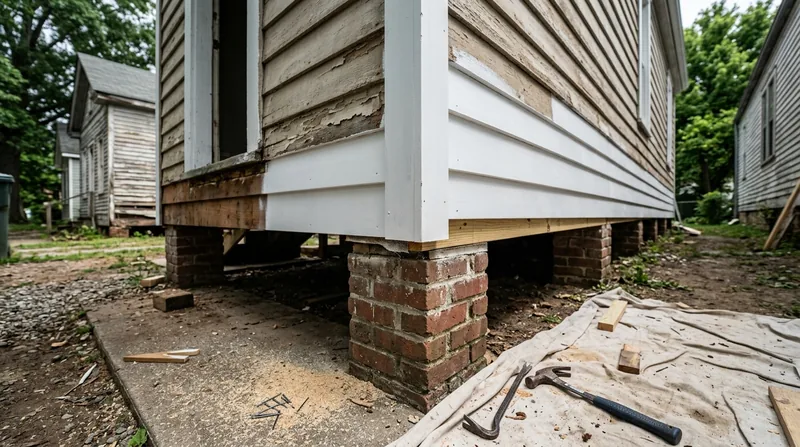




Wood rot and dry rot repair in Louisville is a common need in this city's aging housing stock. Louisville's four-season climate, with cold winters that freeze and thaw, combined with humid summers and real termite pressure, creates ideal conditions for wood decay in the frame homes, pier foundations, and exterior trim that define neighborhoods from Old Louisville and Germantown through the Highlands, Crescent Hill, and into the Jefferson County suburbs. Whether you own a Victorian mansion, a craftsman bungalow, a shotgun house, or a mid-century brick ranch, wood rot spreads slowly but steadily once moisture finds its way into sill plates, rim joists, floor joists, exterior fascia, or structural framing. We cut out the decayed wood, assess what can be repaired versus what must be replaced, and rebuild with sound lumber. The goal is a permanent repair, not a cosmetic patch. If you suspect rot in your home, contact us for a free estimate.
Why Wood Rot and Dry Rot Repair Matters in Louisville's Climate
Louisville sits in a region where freeze-thaw cycles and seasonal moisture swings accelerate wood decay. Winter cold cracks paint seals and allows water into framing; spring thaw and summer humidity keep wood damp for weeks. Older homes built on pier foundations or with wood siding are especially vulnerable because their framing sits closer to ground moisture. Termites add another layer of damage, often working alongside rot to compromise floor joists and sill plates. Catching rot early and addressing it properly stops the spread and prevents costlier structural repairs down the line.
- We identify rot by probing with a sharp tool and examining grain integrity, color change, and soft spots in wood.
- We remove decayed sections completely, cutting back to sound wood and ensuring no soft or discolored fibers remain.
- We treat surrounding wood with a protective finish to slow future moisture penetration.
- We rebuild with rot-resistant lumber or pressure-treated framing, matched to the original species where finish work is visible.
- We address the moisture source by resealing joints, repainting trim, or directing water away from the repair.
Prompt repair protects your home's structural integrity and prevents secondary damage to flooring, walls, and interior finishes.
Key info: Many older Louisville homes have both rot and termite damage. We repair the wood damage from your pest inspection report. Termite treatment and pest control are separate regulated services; we focus on the carpentry. See our termite damage repair page for more detail on how we handle these jobs.
For more information on Louisville building codes and when permits are required, consult the Louisville Metro Permits and Inspections office.
How We Repair Wood Rot: Our Step-by-Step Process
Wood rot repair is not a one-size-fits-all job. We start with a careful inspection to understand the extent of decay, the structural role of the affected wood, and whether the piece can be repaired or must be replaced. Sill plates and floor joists that carry the weight of the house often require replacement; exterior trim and soffit can often be selectively cut and rebuilt. We explain the pathology and the honest choice before we start work.
- We inspect and probe the affected area, identifying soft wood, discoloration, and the boundaries of decay.
- We remove all decayed wood with a chisel or reciprocating saw, cutting back to solid grain and clean edges.
- We allow the cavity to dry thoroughly before applying any finish or replacement lumber.
- We fit new lumber to match the original dimensions and grain direction, securing it with structural fasteners.
- We seal and paint all new wood and exposed joints to prevent future moisture entry.
- We verify moisture control at the source, such as resealing a window frame or redirecting gutter runoff.
The timeline depends on the size of the repair, wood drying time, and whether structural bracing is needed during the work.
Local example: A Schnitzelburg shotgun cottage with rot in the rim joist and sill plate typically needs 2 to 4 days for removal, drying, and replacement. A Victorian mansion in Old Louisville with extensive rot in multiple joists and a damaged header may take a week or more. We stabilize the structure during work and keep disruption to your home to a minimum.
If floor joists are involved, see our detailed guide on floor joist and subfloor repair.
Wood Rot Repair Methods and When to Use Each
| Repair Method | Description | Best For |
|---|---|---|
| Selective cut and replace | Remove only the decayed section, fit new lumber into the opening, and secure with fasteners and adhesive. | Exterior trim, fascia, soffit, window sills, and non-structural wood where the rot is localized. |
| Full member replacement | Remove the entire joist, beam, or stud and install new lumber of the same species and dimension. | Floor joists, rim joists, sill plates, and load-bearing structural members where decay is extensive. |
| Sistering | Install a new joist or beam alongside a damaged one, bolting them together to share the load and restore capacity. | Floor joists and beams where removal is difficult or where partial decay allows the original to remain in place. |
| Protective treatment and sealing | After removal of rot, apply water-resistant finish and caulk all joints to prevent future moisture entry. | All repairs, as a final step to extend the life of the new wood and slow future decay. |
Structural repairs involving joists or load-bearing walls often require a permit from the Louisville Metro Building Department. We help coordinate that process and work to the inspector's requirements.
Wood Rot and Dry Rot Repair Cost in Louisville: What to Expect
Wood rot repair pricing depends on the size of the damaged area, the type of wood involved, access to the work, and whether the repair is structural or cosmetic. A small area of rot in exterior trim or soffit may cost less than a major floor joist repair. We price each job on site after a full inspection. Most homeowners can expect to budget from $650 for a straightforward trim or fascia repair, with larger structural jobs ranging into several thousand dollars depending on scope.
- Localized trim or soffit rot: typically $650 to $1,500, depending on access and lumber species.
- Sill plate or rim joist repair: usually $1,500 to $3,500, depending on the length of wood affected and whether the foundation needs temporary bracing.
- Multiple floor joists or a main beam: $3,000 to $8,000 or more, depending on the number of members, whether sistering or full replacement is used, and structural complexity.
- Travel is included in our pricing throughout Louisville and surrounding areas; we do not charge separate mileage fees.
The best way to understand your cost is to review our full pricing overview and request a free estimate. We will inspect the damage, explain what needs to happen, and give you a clear number before we start.
Cost factors: A mid-century brick ranch in St. Matthews with rot in one floor joist might run $1,200 to $2,000. A Victorian in Old Louisville with rot in multiple joists and a damaged header could cost $5,000 to $10,000. A Highlands bungalow needing new exterior trim and soffit may be $800 to $1,500. The variation is real, which is why we always inspect first.
What to Look for When Hiring a Carpenter for Wood Rot Repair Near Me
Finding a reliable carpenter in Louisville means checking a few key things before you hire. You want someone who is fully insured, who will explain the damage clearly, who gets multiple estimates to compare, and who understands local building codes. Structural repairs often require a permit, and your contractor should be comfortable working with the building department. If your home is in a historic district or subject to HOA rules, ask whether the contractor has experience with those requirements.
- Confirm the contractor is fully insured and ask to see a current certificate of insurance.
- Get written estimates from at least two or three carpenters so you can compare scope, materials, and price.
- Ask for references from recent wood rot repairs in your neighborhood or similar homes.
- Verify that the contractor understands when permits are required and is willing to pull them on your behalf.
- Clarify whether the estimate includes the cost of moisture control measures, such as resealing or repainting.
- Check that the contractor explains the repair method and why it is the right choice for your wood and your home.
When you are ready to move forward, contact us at (502) 586-4642 for a free, no-obligation estimate. We have been in business since 2016, we are EPA Lead-Safe Certified, and we explain every repair in plain language so you understand what is happening to your home.
Wood Rot & Dry Rot Repair in Louisville: Pricing Guide
| Service | Price | Details |
|---|---|---|
| Small exterior trim or soffit rot repair | Starting at $650 | Localized decay in fascia, soffit, or window sill, selective cut and replace, includes new lumber and paint |
| Sill plate or rim joist repair | Starting at $1,500 | Single section of damaged sill or rim, removal and replacement, structural bracing included during work |
| Multiple floor joists or beam replacement | Starting at $3,000 | Extensive rot affecting two or more joists or a main beam, full removal and new lumber, sistering or full replacement as needed |
| Complex structural repair with permits | On estimate | Large-scale rot involving load-bearing walls, multiple structural members, or historic home requirements, requires on-site inspection and permit coordination |
| Travel | Included | No separate mileage or travel fee throughout Louisville and surrounding Jefferson County and Oldham County areas |
| Free estimate | No charge | Full site inspection, damage assessment, and written estimate with no obligation to book, response within 24 hours |
Indicative pricing, the exact cost depends on square footage, finish, and site access. Free personalized estimate within 24h at (502) 586-4642.


