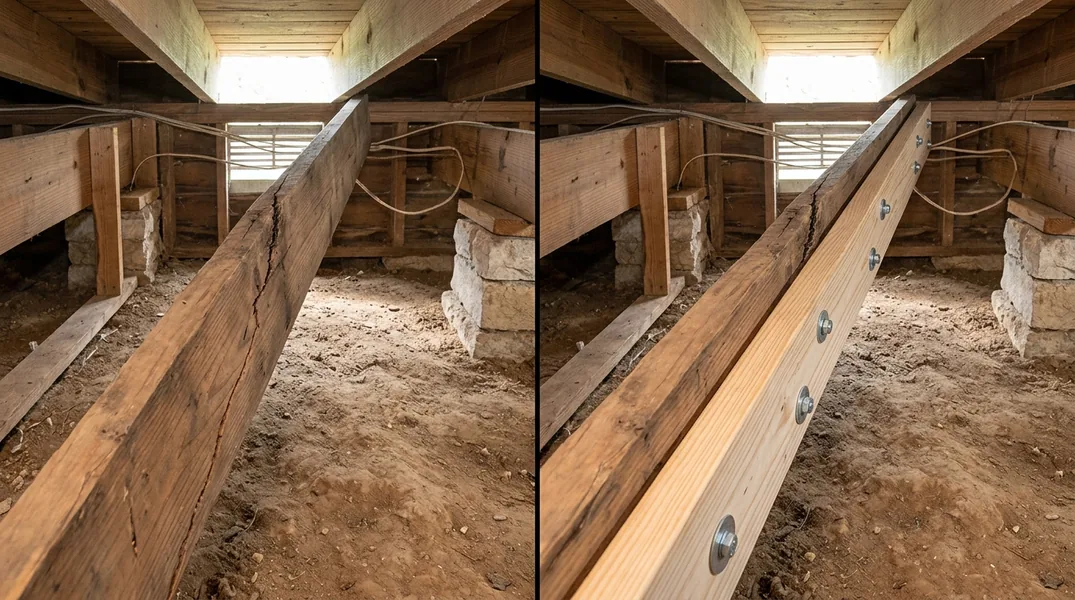
Why Old Louisville Homes Develop Sagging Floors
If you own a historic home in Louisville, you've likely noticed that certain rooms feel slightly uneven underfoot. That subtle slope or visible dip in your hardwood floors isn't just a cosmetic quirk of vintage architecture. Sagging floors are a structural warning sign that something beneath your home needs attention.
The primary culprits behind sagging floors in older Louisville homes are deteriorating pier foundations, damaged floor joists, and moisture-related decay. Many homes built in the early to mid-1900s rest on brick or stone piers that sit directly on soil with minimal concrete footings. Over decades, these piers settle unevenly, crack, or crumble due to poor drainage and soil movement. Meanwhile, wooden floor joists above can rot from moisture exposure, termite activity, or simple age-related wood failure. When the structural support system weakens, gravity does its work, and floors begin to sag noticeably.
The issue becomes more urgent when you understand the cascade effect. A sagging floor isn't just uncomfortable to walk on. It places uneven stress on the remaining structural elements, potentially leading to more extensive damage if left unaddressed. Doors and windows may stick, walls can develop cracks, and the problem compounds over time.
Understanding Pier Foundations and Their Common Failures
Pier foundation systems were the standard for residential construction in Louisville and across the South for over a century. Unlike modern concrete slab foundations, pier systems elevate the home several feet above ground on a series of support columns, typically made from brick, stone, or concrete blocks. This design was practical for the era, allowing air circulation beneath the home and accommodating sloped terrain. However, pier foundations have inherent vulnerabilities that emerge as homes age.
The most common failure point is the pier itself. Original brick and stone piers often lack proper footings and rest directly on undisturbed soil. Over time, soil compaction, water infiltration, and freeze-thaw cycles cause the piers to shift, settle, or crack. In Louisville's climate, where seasonal moisture fluctuations are significant, water seeping around pier bases accelerates deterioration. Additionally, if a home's drainage system has failed or gutters have been neglected, water pools around the foundation, saturating the soil and weakening pier integrity. Some older piers also suffer from mortar degradation, where the binding material between bricks crumbles, reducing the pier's load-bearing capacity.
Another critical issue involves the connection between the pier and the main beam or sill that rests on top. Many historic homes have wooden beams sitting directly on piers with minimal fastening. As the wood weakens from moisture or pest damage, the beam can shift or settle independently of the pier, creating uneven support and pronounced floor sagging in specific areas of the home.
Floor Joist Repair and Sistering: What Homeowners Need to Know
Floor Joist & Subfloor Repair is one of the most common solutions for addressing sagging floors in older homes. Floor joists are the horizontal wooden beams that span between support piers or beams and carry the weight of your floors, furniture, and occupants. When these joists weaken due to Wood Rot & Dry Rot Repair, Termite Damage Repair, or simple age, the floor above sags noticeably.
One of the most effective repair techniques is called sistering. Sistering floor joists involves fastening a new or reinforced wooden member alongside a damaged or weakened joist, effectively doubling the structural capacity of that support line. A carpenter will carefully position the new joist (called a sister joist) next to the existing damaged one and secure them together with bolts and nails spaced at regular intervals. This creates a composite beam that shares the load, allowing the original joist to be partially relieved of stress while the new member provides additional support. The process is less invasive than full joist replacement and often preserves more of the original structure, which many homeowners value in historic properties.
The success of sistering depends on proper assessment. A professional carpenter must first determine whether the joist damage is localized or extends along the entire length. If rot or pest damage is extensive, sistering alone may not be sufficient, and partial or full joist replacement may be necessary. Additionally, sistering requires adequate clearance beneath the home. In some cases, temporary support beams must be installed during the repair work to prevent the floor from sagging further during construction.
Sagging Floor Repair Cost in Louisville: What to Budget
Understanding the financial investment required for sagging floor repair is essential for planning and decision-making. The pricing for floor repairs varies significantly based on the scope of damage, the number of joists affected, and the underlying cause. A straightforward sistering project on a single joist might cost between $800 and $2,000, while addressing sagging across multiple joists or multiple rooms can easily reach $5,000 to $15,000 or more.
Pier foundation repair introduces additional costs. If piers have settled or cracked, they may need to be shimmed, reinforced, or partially rebuilt. Shimming involves inserting steel plates or concrete wedges beneath the pier to level the home and restore proper support. This process typically ranges from $1,500 to $4,000 per pier, depending on the extent of work. If piers require significant reconstruction or if the home needs to be temporarily jacked and leveled, costs escalate accordingly. A full pier replacement can run $3,000 to $8,000 per pier, and homes with multiple failing piers face substantial bills.
The overall cost also depends on whether moisture or pest issues are present. If Wood Rot & Dry Rot Repair is needed alongside joist repair, or if termite damage must be addressed, the project scope expands. Additionally, if the sagging is severe enough to require temporary support systems during repair, those costs are added to the total. The best way to understand your specific financial obligation is to request a free estimate from a qualified local contractor who can inspect the damage and provide a detailed quote.
When to Call a Professional: Signs Your Floors Need Immediate Attention
Homeowners sometimes hesitate to address sagging floors, hoping the problem will resolve itself or remain stable. This approach is risky. Structural issues tend to worsen over time, especially in older homes where multiple systems may already be compromised. Certain warning signs indicate that professional inspection and repair should be prioritized.
If you notice visible dips or waves in your hardwood floors, doors that no longer close properly, or cracks forming in plaster or drywall, these are red flags. Additionally, if you can access the crawlspace or basement beneath your home and observe visible rot on wooden joists, standing water, or crumbling piers, professional help is needed promptly. A soft or bouncy floor when you walk across it suggests that joists are flexing excessively, indicating structural weakness. If you detect musty odors in crawlspaces or see signs of pest activity, the urgency increases further.
The safest approach is to have a professional carpenter evaluate the situation. Louisville Carpentry offers comprehensive inspections and can identify the root cause of your sagging floors. Call (502) 586-4642 to schedule an appointment, or use our website to request a free estimate. A professional assessment typically costs nothing and provides clarity on what repairs are truly necessary.
Prevention and Long-Term Maintenance for Historic Homes
Once sagging floors have been repaired, the focus shifts to prevention and long-term maintenance. Many of the issues that cause floor damage are preventable through consistent upkeep and attention to moisture control. For homes with pier foundations, ensuring proper drainage around the perimeter is critical. Gutters should be clean and functional, downspouts should direct water away from the home's foundation, and grading should slope away from the house. In Louisville's climate, where rainfall is frequent, a well-maintained drainage system is your first line of defense against water infiltration and soil saturation.
Crawlspace ventilation is equally important. Older homes often have inadequate or blocked vents beneath the floor system, trapping moisture and creating an environment where rot and pest damage flourish. Ensuring that crawlspace vents remain clear and functional helps maintain dry conditions that protect wooden joists and beams. Some homeowners benefit from installing a vapor barrier on the crawlspace floor to further reduce moisture accumulation.
Regular inspections are your best investment in long-term structural health. Once yearly, if you can safely access your crawlspace, look for signs of new rot, pest activity, or water damage. Catching problems early allows for less invasive and less expensive repairs. If you're uncomfortable crawling beneath your home or if your home's configuration makes inspection difficult, professional contractors can perform these checks as part of routine maintenance. Louisville Carpentry can schedule periodic inspections to monitor the health of your home's structural system and catch emerging issues before they become costly repairs.
Looking for a professional carpentry contractor in Louisville? Louisville Carpentry responds fast for all your carpentry needs.
Get a Free QuoteOur services: Wood Rot & Dry Rot Repair · Termite Damage Repair · Floor Joist & Subfloor Repair